




 14:02 2026-03-10
Every day, we walk on a thin layer of asphalt without knowing that a mechanical heart of civilization beats just beneath our soles. Let us look into titanic concrete cathedrals, into bunkers that store humanity's digital immortality, and into laboratories where scientists try to unravel the universe's secrets. This is a journey into the depths of the Earth, where engineering genius meets the primeval silence of rock. The scale alone takes the breath away.
 400
400 9
9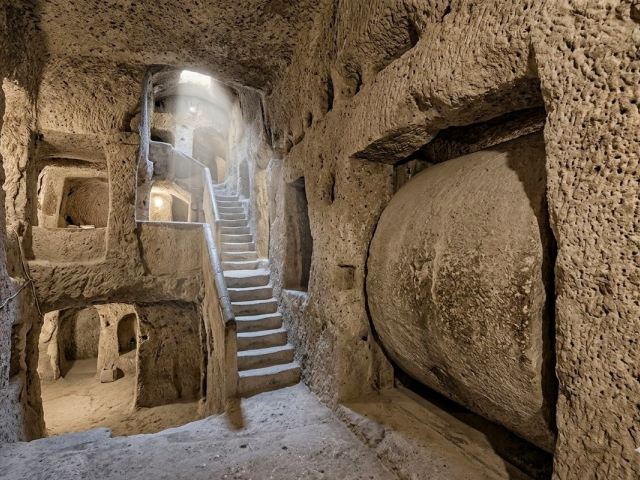
Sunken palace — Basilica Cistern (Istanbul)
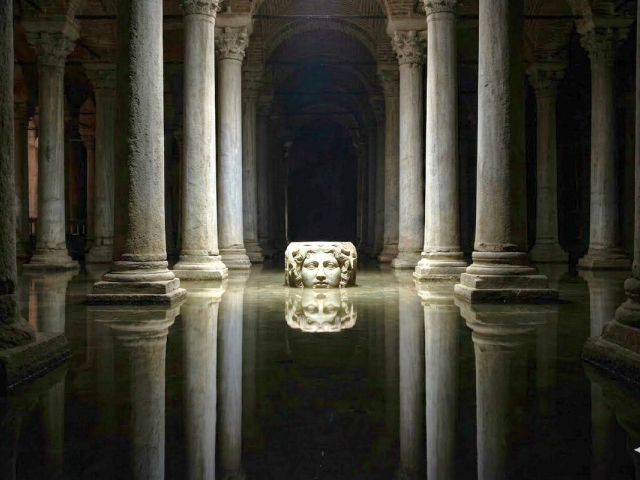
The sixth‑century water reservoir of Istanbul is a forest of 336 columns standing in water, wrapped in complete darkness. In Byzantine times, it held 80,000 cubic meters of water for the city’s needs. Today, it is a place of mystical atmosphere, where the reflected heads of the Gorgon Medusa serve as bases for some columns. The soft lap of water and the echo of footsteps create the sensation of time frozen. It is an example of how ancient infrastructure can outlast empires and become an aesthetic treasure hidden beneath the noisy streets of a modern metropolis.
Eight‑storey ghost city — Derinkuyu (Turkey)
Under Cappadocia lies a genuine underground metropolis that could house 20,000 people. Built thousands of years ago, Derinkuyu descends eight levels deep — roughly 60 meters. It contained living quarters, stables, wineries, and even schools. The ventilation system was so advanced that air remained fresh even on the lowest floors. Heavy stone wheel doors protected inhabitants from uninvited visitors. This site shows how humans can adapt to any threat by turning solid rock into a snug, secure shelter beyond the reach of time.
Concrete temple of water — G‑Cans discharge channel (Kasukabe, near Tokyo)
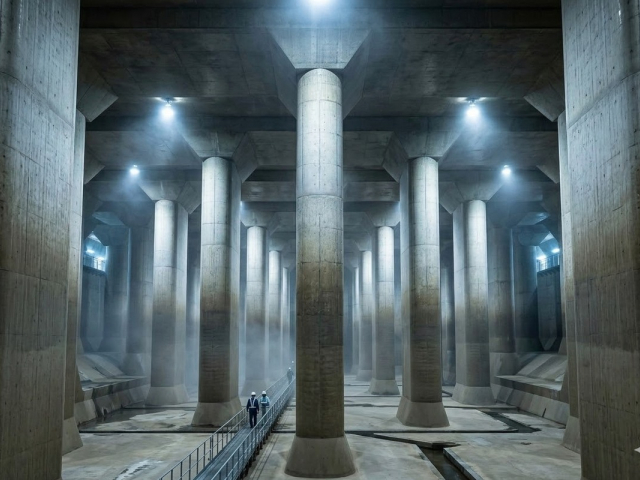
Beneath the Japanese city of Kasukabe hides a structure fit for a film about gods. It is the world’s largest system for diverting stormwater. The main hall bears the nickname the Underground Temple because its roof rests on 59 columns weighing about 500 tons each. During typhoons, the system can pump 200 tons of water per second. In dry periods, the space takes on a solemn, almost religious silence. A purely utilitarian engineering facility becomes an underground architectural masterpiece where the power of concrete stands against the fury of ocean and sky.
Stockholm Metro —longest art gallery in world
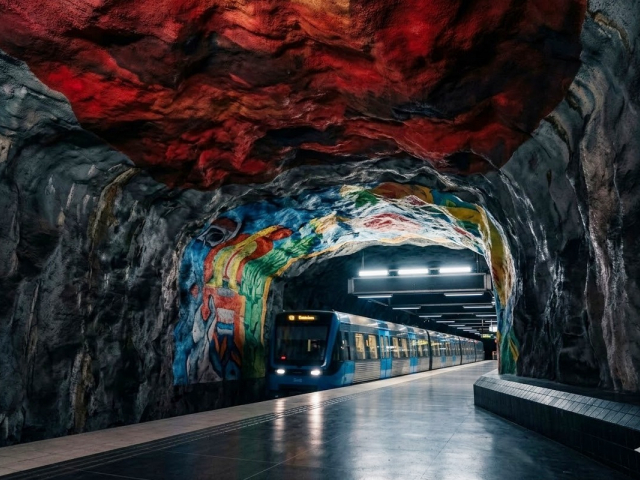
The Swedish subway is not merely transport. It is a triumph of design over rock. Instead of covering station walls with concrete, architects left the bedrock exposed and transformed stations into vast painted caverns. At Solna Centrum, passengers are greeted by a blood-red sky. At T‑Centralen, soothing blue patterns calm commuters. This project turned transport infrastructure into part of the cultural code. Each day, passengers travel through a “living rock” that proves there is room for art and imagination even below ground.
Artery through Alps — Gotthard Base Tunnel (Switzerland)
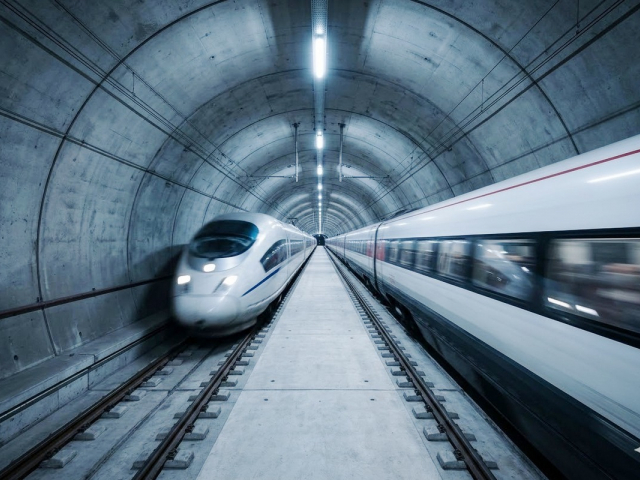
The world’s longest and deepest railway tunnel, at 57 kilometers, runs beneath the heart of the Alps. Above the passengers, the mountain reaches up to 2.3 kilometers in places. Construction required the extraction of 28 million tonnes of rock. Inside the tunnel, trains run at 250 km/h, crossing the Gotthard in minutes, almost without the traveler noticing. Engineers worked from both ends and achieved a meeting deviation of only a few centimeters. The tunnel stands as a symbol of engineering precision triumphing over the unyielding power of mountains.
Digital bunker — Pionen data center (Sweden)
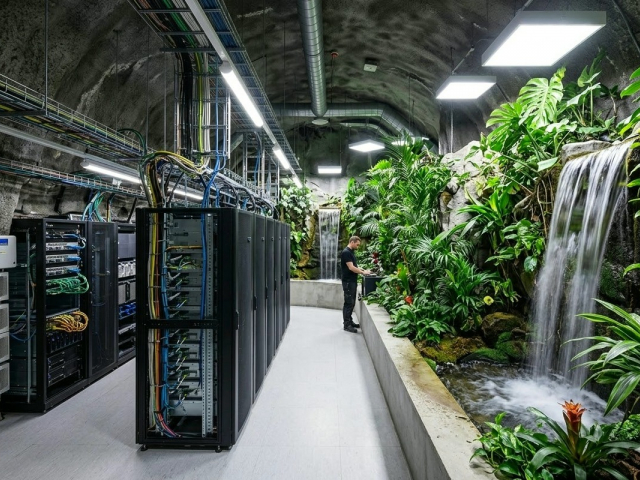
Inside a former nuclear bomb shelter under Stockholm sits one of the world’s most striking data centers. WikiLeaks servers coexist here with artificial waterfalls and jungle planted under daylight lamps. Thick granite walls protect data from electromagnetic pulses and explosions, and the interior could serve as a set for an adventure film. This is a place where cloud technology acquires a tangible, heavy physical shell. Security is elevated to a cult, turning a repository of zeros and ones into an impregnable fortress of the modern world.
Ring of science’s power —LHC (CERN)
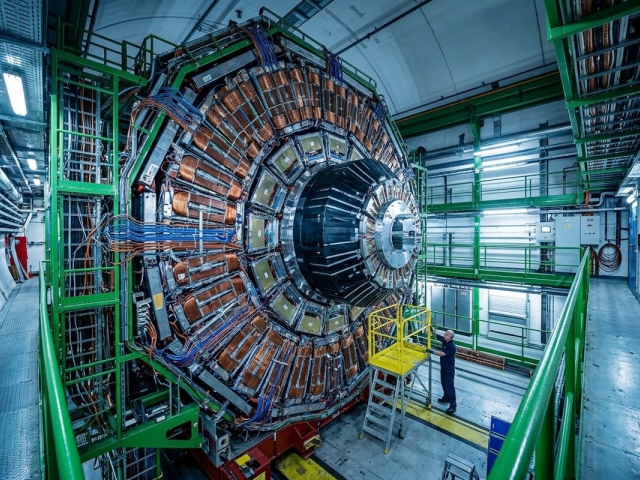
The Large Hadron Collider is a 27‑kilometer tunnel located about 100 meters underground on the border of France and Switzerland. It is the most complex machine in history, hidden from public view. Along the giant ring stand detectors, the size of five‑storey buildings, entangled in millions of cables. Here, in the silence of underground halls, particles accelerate to speeds near light, recreating conditions of the Big Bang. This is where engineering scale serves the fundamental questions of existence, and cold concrete walls hide energy capable of birthing new worlds.
Ark in permafrost — Svalbard Global Seed Vault (Norway)
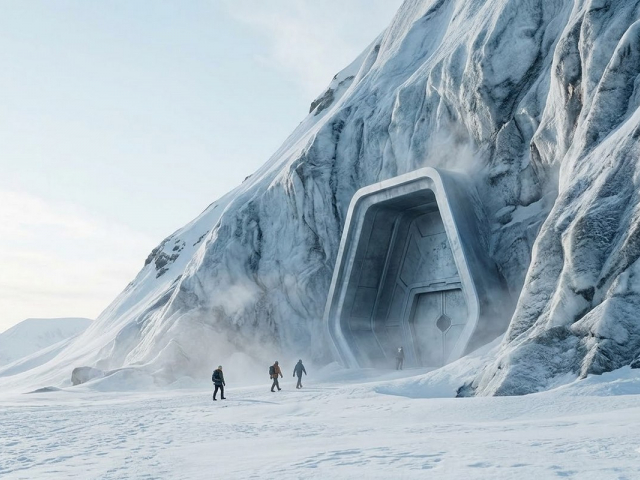
Deep in a mountain on the island of Spitsbergen sits the Doomsday Vault. It is safe for the seeds of the world’s crops. The entrance looks like a futuristic portal cut into ice. Inside, millions of samples are stored at a constant −18 degrees Celsius. It is a kind of insurance policy for humanity against global catastrophe. There are no people here, only endless rows of boxes in sterile tunnels. The Arctic cold acts as a guarantor of the biological survival of civilization.
At threshold of abyss — Mponeng mine (South Africa)
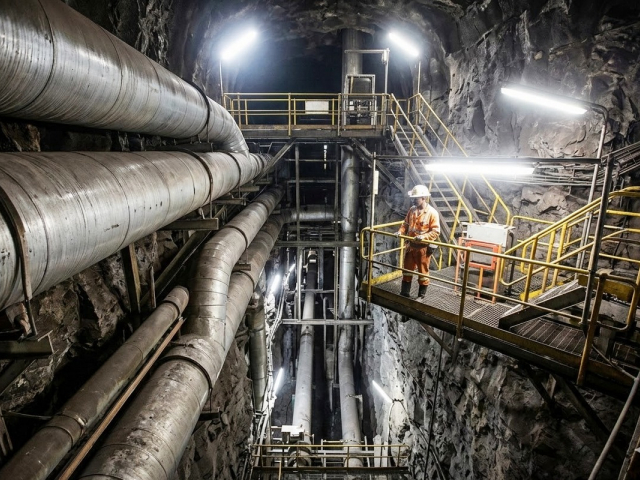
The world’s deepest mine drops four kilometers into the Earth. Rock temperatures here reach +66 degrees Celsius, and only massive cooling systems allow humans to work in these shafts. The descent in the cage takes hours, and the air pressure is physically felt. Gold miners work in conditions comparable to extraterrestrial colonies. This is the extreme limit of human presence under the planet’s surface. The architecture here consists of temporary supports and tunnels constantly threatened to close under the mountains’ weight, a reminder of the high cost of Earth’s riches.


-
Grand Choice
Contest by
InstaForexInstaForex always strives to help you
fulfill your biggest dreams.JOIN CONTEST -
Chancy DepositDeposit your account with $3,000 and get $9000 more!
In May we raffle $9000 within the Chancy Deposit campaign!
Get a chance to win by depositing $3,000 to a trading account. Having fulfilled this condition, you become a campaign participant.JOIN CONTEST -
Trade Wise, Win DeviceTop up your account with at least $500, sign up for the contest, and get a chance to win mobile devices.JOIN CONTEST


